A nearly 3,000-Year Journey Through History
From the dawn of our nation to the present day, the flow of royal power has shaped Vietnam for more than three millennia. Join us as we retrace the footsteps of ancient kings and dynasties, through cities that once held the soul of the nation.
I. Ancient Times – The Birth of the Vietnamese State
1. Phong Chau (Van Lang Kingdom)
- 7th century BC – 258 BC
- Viet Tri, Phu Tho
- Capital of the legendary Hung Kings – the founders of the Vietnamese nation.
- Significance: Cradle of the first Vietnamese state, closely tied to myths like Son Tinh – Thuy Tinh and the worship of the Hung Kings.
2. Co Loa (Au Lac Kingdom)
- 257 – 179 BC
- Dong Anh, Hanoi
- Capital of King An Duong Vuong, featuring spiral ramparts and advanced defense techniques from the Bronze-Iron Age.
II. Chinese Domination and the Road to Autonomy
3. Luy Lau – Long Bien (During Chinese Rule)
- 111 BC – 939 AD
- Bac Ninh – Hanoi Administrative and cultural center of Northern Vietnam under Chinese rule.
- Significance: Birthplace of Confucianism and Buddhism in Vietnam.
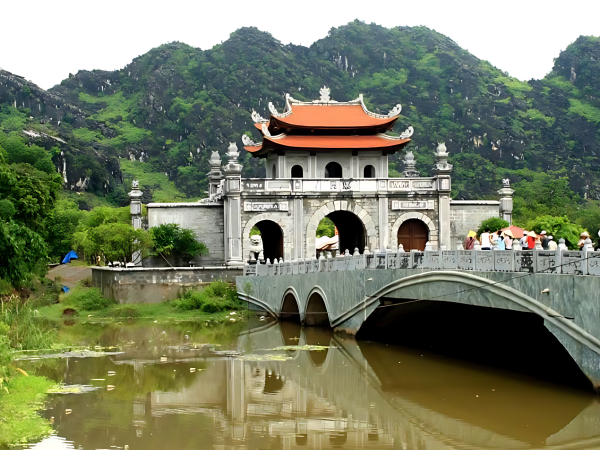
4. Hoa Lu (Dai Co Viet Kingdom)
- 968 – 1010
- Ninh Binh
- Capital of Dinh Bo Linh and Le Dai Hanh.
- A rugged stronghold where Vietnamese independence was reborn after centuries of foreign domination.
III. Thang Long – The Eternal Heart of Vietnamese Civilization
5. Thang Long (Dai Viet Kingdom)
- 1010 – 1397, 1428 – 1788
- Hanoi
- The most enduring political and cultural capital in Vietnam’s history.
- Founded by Emperor Ly Thai To through the “Edict on the Transfer of the Capital.”
- UNESCO World Heritage Site: Thang Long Imperial Citadel

6. Tay Do (Ho Dynasty Capital)
- 1397 – 1400
- Vinh Loc, Thanh Hoa
- Stone fortress built by Ho Quy Ly, reflecting reformist ambition.
- UNESCO World Heritage Site: Ho Dynasty Citadel
7. Dong Quan (Thang Long under Ming Rule)
- 1407 – 1427
- Hanoi
- Symbol of one of the darkest foreign occupations before national hero Le Loi restored independence.

IV. Champa – The Southern Kingdom by the Sea (2nd Century – 1471)
A sovereign kingdom of the Cham people that coexisted with Dai Viet for over 13 centuries. The capital moved across different regions:
8. Tra Kieu (Simhapura)
- 4th – 9th century
- Quang Nam
- Hindu sanctuary, near the spiritual site of Mi Son.

9. Dong Duong (Indrapura)
- 9th – 10th century
- Quang Nam
- The Buddhist capital of Champa.
10. Vijaya (Do Ban Citadel)
- 11th – 1471
- An Nhon, Binh Dinh
- The most powerful Champa capital, conquered by Le Thanh Tong in 1471, ending Champa’s independence.
V. Cham Autonomy under Vietnamese Rule (1471 – 1832)
Although Champa ceased to be independent after 1471, the southern principality of Panduranga (Thuận Thành) retained semi-autonomous status under the Nguyen Lords:
11. Panduranga (Thuan Thanh Citadel)
- 1471 – 1832
- Ninh Thuan – Binh Thuan
- The Cham people were allowed internal autonomy until Emperor Minh Mang dissolved the principality and assimilated the region fully.
Do Ban Citadel in Binh Dinh: Once the heart of Champa, later the seat of the Tay Son Dynasty and still home to surviving relics.
VI. The Tay Son Era – A Revolutionary Dynasty
12. Hoang De Citadel (Emperor’s Citadel)
- 1778 – 1793
- An Nhon, Binh Dinh
- Capital of Nguyen Nhac (Thai Duc), the first ruler of the Tay Son Dynasty.
13. Phu Xuan (Hue)
- 1788 – 1802
- Hue
- Capital of Emperor Nguyen Hue (Quang Trung), known for his military genius and national reunification.
VII. Phu Xuan – The Imperial Capital of the Nguyen Dynasty
14. Phu Xuan (Hue)
- 1802 – 1945
- Hue
- Capital of the Nguyen Dynasty (Gia Long to Bao Dai).
- Final feudal capital of Vietnam.
- UNESCO World Heritage Site: Hue Imperial City
VIII. Hanoi – The Modern Capital
15. Hanoi
- From 1945 to present
- Capital of the Democratic Republic of Vietnam → Socialist Republic of Vietnam.
- Where President Ho Chi Minh declared independence on September 2, 1945.
- Today, Hanoi remains the vibrant political and administrative heart of the nation.
IX. Conclusion
Each capital is a symbol of an era—of rise and fall, of independence and resilience, of cultural evolution and national pride.
By revisiting the lands that once held the heart of Vietnam, we gain a deeper understanding of the nation’s long journey of building and safeguarding its identity.
Golden Life Travel – Marketing Team
https://www.goldenlifetravel.vn | www.vietnamgo.com.vn
info@goldenlife.vn
Call Center: 1900 599946
Hotlines: +84 913 611980 | +84 913 885400
“Travel through time, walk the paths of kings, and feel the pulse of a nation.” 🇻🇳