History never dies. It transforms. The Champa Kingdom may no longer exist on maps, but its soul lingers in each Cham tower, each folk melody, each woven thread from the hands of Cham artisans. It is a legend, still breathing beneath the red bricks and desert winds of Vietnam.
THE CHAMPA KINGDOM: A MAJESTIC CIVILIZATION MERGING INTO VIETNAM’S HERITAGE
A journey of glory – resilience – and graceful transformation
If history were a symphony, Champa would be its shimmering solo movement rising in the heart of Central Vietnam. Emerging in 192 AD, the Champa Kingdom rose to power as a maritime and cultural force, trading with India, China, and even Arab merchants.
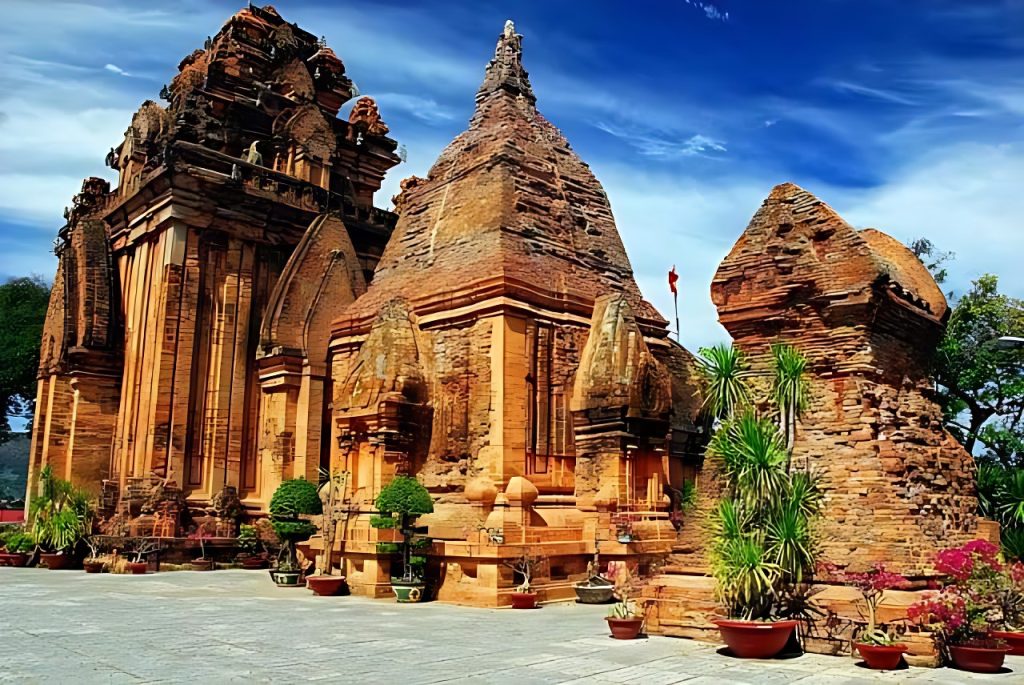
But Champa wasn’t just a trading power. It was a spiritual civilization, known for its majestic red-brick towers, sophisticated Sanskrit inscriptions, and its own unique Cham language and script. Key milestones:
- 2nd–9th century: Birth and expansion, from Amaravati (modern Quang Nam – Da Nang) to Vijaya (Binh Dinh), Kauthara (Khanh Hoa), and Panduranga (Phan Rang).
- 10th–13th century: The golden age of Champa with kings like Harivarman I and Indravarman II.
- 15th century: After the fall of Vijaya in 1471 to Emperor Le Thanh Tong, Champa lost its capital and gradually integrated into Đại Việt. Yet, its culture quietly persisted—like a whispered legend in the wind.

THE CHAM PEOPLE TODAY: ROOTED YET RESILIENT
Today, Cham communities continue to thrive in:
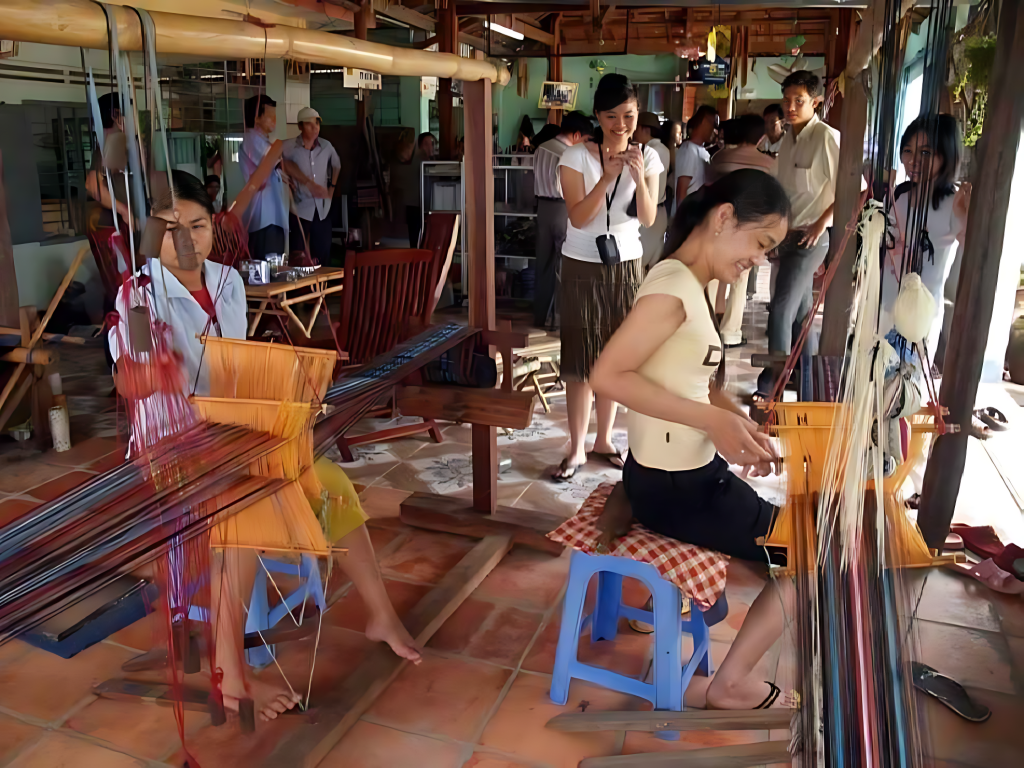
- Ninh Thuan – Binh Thuan: Villages like My Nghiep (weaving) and Bau Truc (pottery) are living museums of Cham identity.
- An Giang, Tay Ninh: Islamic Cham communities live peacefully along rivers, practicing traditional faiths (Bani and Sunni Islam).
- Central Highlands and parts of Binh Dinh still preserve remnants of Cham ancestry.
MUST-VISIT CHAM HERITAGE SITES
| (Vietnamese Name) | (English Name) | City/ Province | Latitude & Longitude |
|---|---|---|---|
| Thánh Địa Mỹ Sơn | My Son Sanctuary | Quang Nam | 15.7753, 108.1236 |
| Tháp Bánh Ít | Banh It Towers | Bình Định | 13.8427, 109.1644 |
| Tháp Đôi | Twin Towers | Bình Định | 13.7648, 109.2362 |
| Tháp Dương Long | Duong Long Towers | Bình Định | (đang cập nhật) |
| Tháp Cánh Tiên | Canh Tien Tower | Bình Định | (đang cập nhật) |
| Tháp Phú Lốc | Phu Loc Tower | Bình Định | (đang cập nhật) |
| Tháp Bình Lâm | Binh Lam Tower | Bình Định | (đang cập nhật) |
| Tháp Thủ Thiện | Thu Thien Tower | Bình Định | (đang cập nhật) |
| Tháp Chuông | Bell Tower | Bình Định | (đang cập nhật) |
| Tháp Nhạn | Nhan Tower | Phu Yên | 13.0973, 109.3016 |
| Tháp Po Nagar | Po Nagar Towers | Khanh Hòa | 12.2451, 109.1956 |
| Tháp Hòa Lai | Hoa Lai Towers | Ninh Thuan | 11.6000, 108.9989 |
| Tháp Po Klong Garai | Po Klong Garai Towers | Ninh Thuan | 11.5673, 108.9911 |
| Làng Chăm Mỹ Nghiệp | My Nghiep Cham Village | Ninh Thuan | 11.5655, 108.9965 |
| Làng Chăm Bàu Trúc | Bau Truc Cham Village | Ninh Thuan | 11.5625, 108.9947 |


Twin Towers – A Hidden Gem in the Heart of Quy Nhon





CHAMPA KINGDOM TIMELINE
| Period | Key Historical Events |
| 192 AD | Formation of the Champa Kingdom from the ancient state of Lâm Ấp. |
| 4th–9th century | Development of sub-kingdoms: Amaravati, Vijaya, Kauthara, Panduranga. |
| 875 AD | Establishment of Mỹ Sơn Sanctuary as a major Cham religious and cultural center. |
| 10th–13th century | The golden age: flourishing economy, arts, and Hindu-Buddhist spirituality. |
| 1471 AD | Đại Việt attacks Vijaya. Champa loses its capital and begins to decline. |
| 1832 AD | Nguyen Dynasty annexes Panduranga. Cham people remain dispersed across regions. |
Closing Line:
Let the Cham towers be more than just a postcard memory — let them live on in your heart, whispering tales of a kingdom that once rose with grace and now lingers in silence. One day, beneath the sunlit skies of Central Vietnam, you may just hear its voice… waiting for you to listen.